






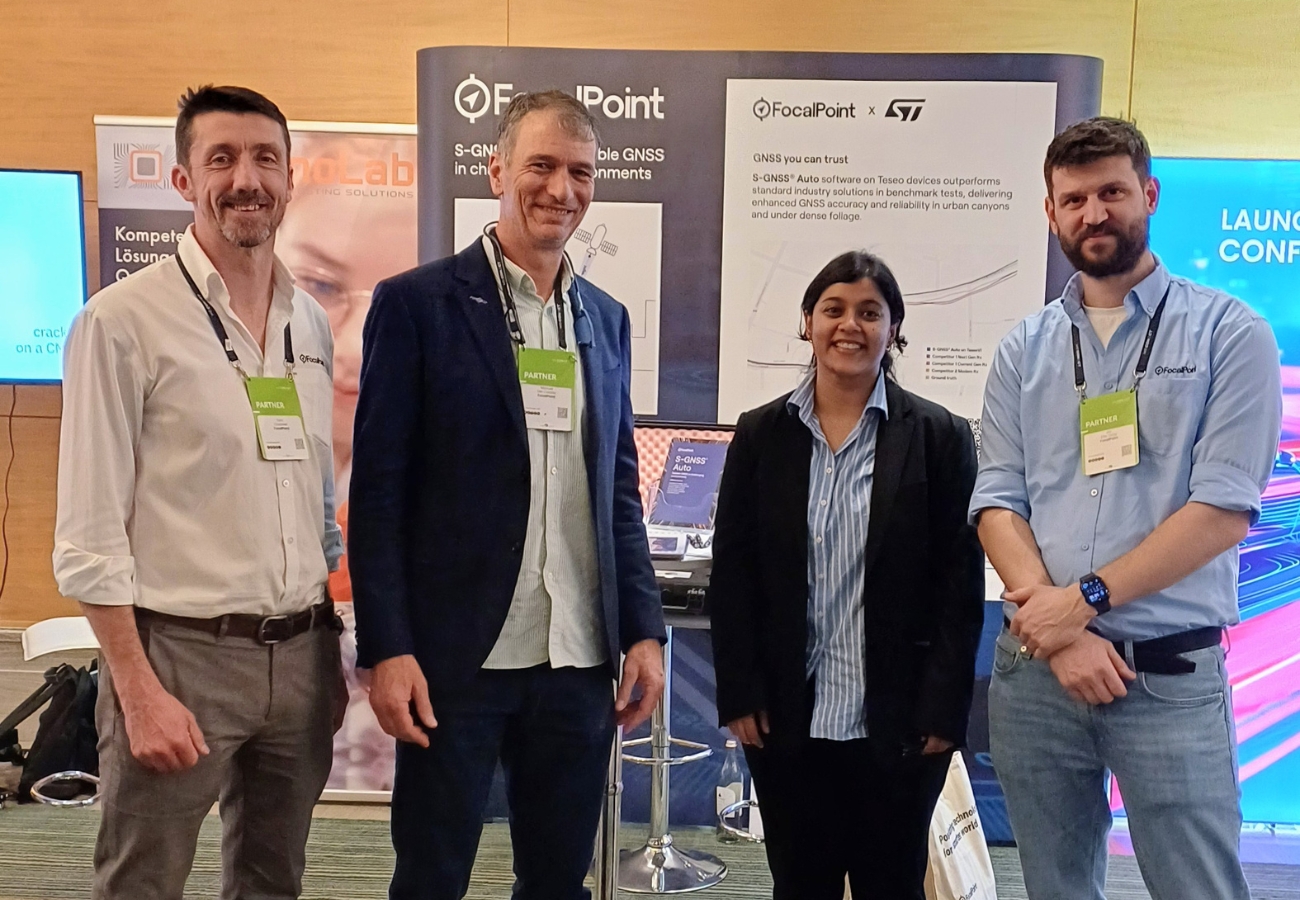
This week, FocalPoint attended Tech.AD Europe 2026 in Berlin, an event that brings together automotive partners in Europe under one roof. We had insightful conversations with OEMs, Tier 1s and developers across the ecosystem, including both established companies and disruptive startups.
We attended sessions and workshops hosted by companies including NIO, Aumovio, Audio, BMW, Bosch, Uber AI Solutions, and more. Some industry takeaways from the event:
Safety remains the north star: Safety formed a big theme of the event from the opening session through to closing discussions, spanning functional safety, SOTIF and the EU AI Act. The consistent message across sessions was that safety evidence needs to be built into development from day one, not bolted on at the end. For ADAS at any level, proving a system is reliably safe is the central challenge.
L2+ is the pragmatic path forward, for now: There is a notable step back from L3, driven by a combination of liability concerns, regulation issues across countries, and an operational domain that isn’t yet broad enough to justify the subscription model. Companies like Arbe made the case that consumers ultimately want L3, but the general consensus is that a more complete L3 offering, with wider operational coverage, needs to come before broad deployment. L2+ is seen as the responsible and commercially sound bridge.
AI and simulation are reshaping development: AI techniques in image recognition are maturing rapidly. Multiple sessions showcased tools that combine multimodal data (camera, radar, LiDAR) with high-fidelity simulation environments to compress development cycles.
“Lean autonomy” is driving sensor stack optimisation: There is a strong push to do more with less: optimising sensor configurations (e.g., radar + vision) and using AI to extract greater value from existing hardware. Cost-effective ADAS for L1 and L2 is a major focus.
SDV architecture is the enabler of future flexibility: Software-defined vehicle architecture was a recurring theme as the structural foundation that allows ADAS features to evolve and be updated over time, decoupling hardware lifecycles from software innovation.
Ecosystem collaboration is a perceived necessity: No single company is building ADAS alone. Cross-industry collaboration across OEMs, Tier 1s, sensor makers, and software platforms continues to be seen as essential to solving the complexity of safe, scalable autonomy.
As the industry navigates this moment of recalibration balancing ambition with safety and trust, one foundational requirement remains constant across every level of automation: reliable positioning. GNSS provides the absolute location reference the entire ADAS stack depends on. As operational domains expand and safety requirements tighten, its importance only grows.
This was a theme that resonated strongly at our booth. The pressure to deliver capable ADAS across more environments is intensifying, and the focus on L2+ creates a real opportunity. By keeping the driver available to take control, OEMs can avoid the liability challenges of L3 while still unlocking commercial value.
Reliable GNSS plays a direct role here: proven in dense urban environments, it enables OEMs to calibrate their broader sensor suite and strengthen overall system reliability.
FocalPoint’s S-GNSS® Auto, integrated on STMicroelectronics, has consistently delivered accuracy improvements in the world’s most challenging environments including Tokyo, Frankfurt, San Francisco, and London. We’re currently working with leading automakers and Tier 1s at various stages of evaluation and integration: take a look at our evaluation kits to learn more.
If you were at Tech.AD and didn’t get a chance to stop by, or want to continue a conversation we started, we’d love to hear from you. Contact us here.
Group pic L to R: Tom Crabtree, Manuel Del Castillo, Ramya Sriram, Jez Ellis-Gray
Share this post

Ramya Sriram leads marketing at FocalPoint, a UK-based company that provides GPS-enhancing software for automotive, wearables and smartphones.
Related post
Jammertest 2025 Results: How FocalPoint’s Supercorrelation® Defends Against Spoofing
A first look at the results from Jammertest 2025 in Norway, which demonstrate how Supercorrelation® enhances GNSS receiver resilience to spoofing attacks.